


Following the publication of the new ISPE Good Practice Guide: Digital Validation, a comprehensive guide on how to adopt, implement, and govern 100% digital validation tools, known as Digital Validation Tools (DVTs), is presented for the first time.
In this blog post, we will summarize in detail the most relevant aspects of this guide, which positions itself as the new reference standard for organizations wishing to advance toward digital maturity in validation.
What is a Digital Validation Tool (DVT)?
A Digital Validation Tool (DVT) is more than just a simple electronic tool. It is a platform (or set of platforms) designed to digitally manage the entire validation lifecycle, including:
- Requirements drafting and management (URS/RS)
- Risk management
- Test design and execution (IQ/OQ/PQ)
- Electronic signature compliant with 21 CFR Part 11 / EU GMP Annex 11
- Requirements and evidence traceability
- Version control, changes, deviations, and periodic reviews
- Integration with other systems: LIMS, Historian, DMS, etc.
The guide is clear: the goal is not to digitize paper, but to transform processes with an approach based on data, automation, and digital collaboration.
What does the ISPE guide include?
It addresses all the necessary elements to implement a DVT effectively and compliantly:
- Conceptual framework and evolution of the digital model
The guide starts with a reflection on how validation in the industry has evolved from traditional paper-based methods to current digital approaches. It clearly outlines how many organizations have passed through intermediate stages, such as using basic document management systems (DMS) or in-house solutions, until reaching integrated digital platforms that allow managing the entire validation lifecycle.
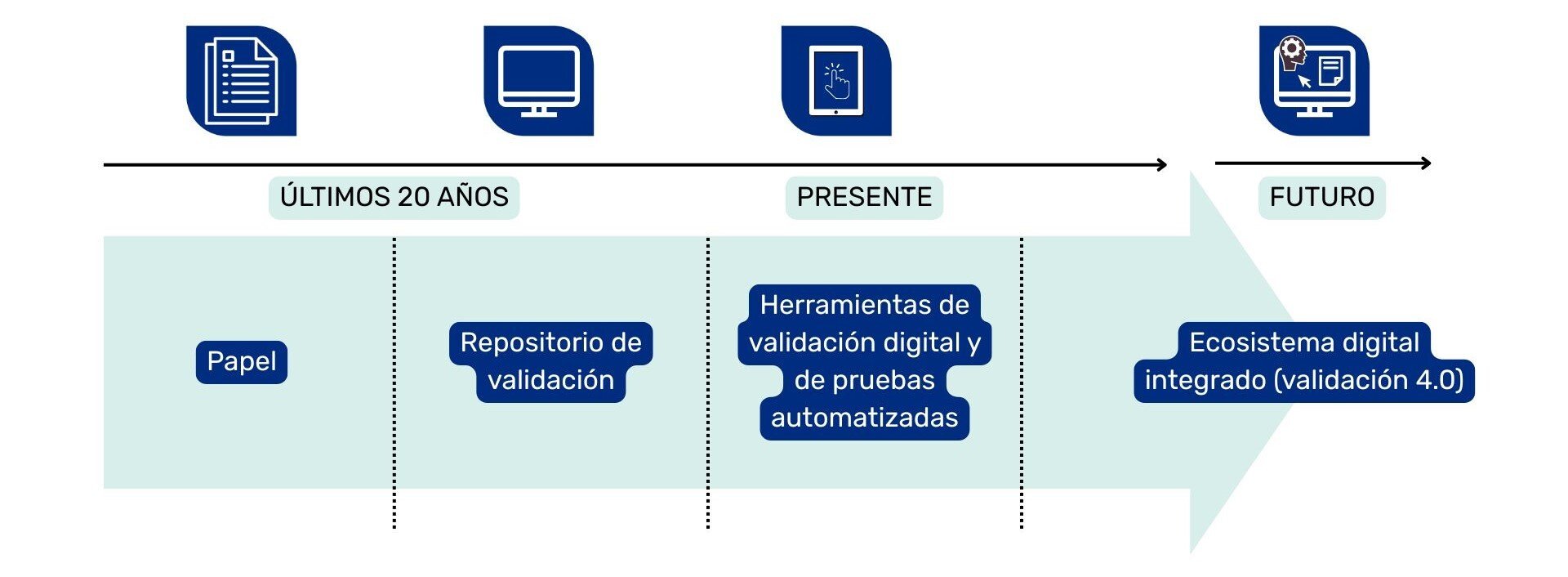
This journey is framed within a new paradigm called Validation 4.0, where validation becomes a dynamic continuous process, based on data and risks, and aligned with current technological and regulatory advances. The guide connects it directly with standards such as GAMP 5 (second edition), FDA CSA (Computer Software Assurance) principles, and ICH Q9 and Q10 principles. This vision not only contextualizes the need for change, but also provides a solid framework on which to build digital transformation, ensuring consistency with regulatory expectations and facilitating strategic decision-making.
- Benefits and use cases
Throughout the guide, the multiple benefits offered by digital validation tools compared to traditional approaches are highlighted:
- Improvements in real-time visibility of document status
- Automation of traceability between requirements and tests
- Cost reduction
- Improvement in remote collaboration
- Operational agility
Furthermore, it explores how DVTs can integrate with other systems such as LIMS or data historians, further expanding their utility.
These benefits are not only technical or economic, but also respond to a critical need for organizations to comply faster and better in an increasingly demanding regulated environment. The guide outlines concrete use cases that help visualize the direct impact digitalization has on daily practice, facilitating the identification of opportunities within each organization.
- Cómo construir un business case sólido
One of the most pragmatic aspects of the guide is its focus on how to justify the adoption of a DVT to executive management or the finance department. Recommendations are provided to build a structured business case, including:
- Cost-benefit analysis
- Estimated ROI
- Categorization of tangible benefits (such as paper, time, or error savings) and intangible benefits (compliance improvement, simpler audits, increased organizational agility)
It also proposes identifying "quick wins" that generate value from the outset, such as digitizing specific phases of the process or pilot project teams. This section is especially relevant because it recognizes that, in GxP environments, investment decisions must be based on concrete evidence, helping to articulate arguments that connect technological transformation with strategic business goals.
- Implementation strategy
The guide devotes an extensive and detailed section to addressing DVT implementation, not only from a technical standpoint, but also from organizational change:
- Different approaches are described, such as starting with pilots or performing phased rollouts, always accompanied by effective change management.
- Guidelines are included to validate the digital tool itself (which must also comply with GxP requirements), integrate it with existing systems, and progress along a digital maturity model, ranging from level 1 (paper) to level 5 (automated and connected validation).
This section is key because it helps avoid the most common mistakes, such as underestimating resistance to change, not involving all relevant actors, or attempting to implement too much at once. It offers a realistic roadmap that considers both the technical capacity and the cultural readiness of the organization.
- DVT governance
Once a DVT is implemented, its success and sustainability depend on good governance. The guide stresses the importance of establishing clear roles, especially that of the Business Process Owner, who acts as the functional manager of the process managed in the tool.
It also addresses top-down governance principles that ensure strategic alignment, and bottom-up principles that foster operational adoption and continuous improvement. It explains how to maintain the validated state of both the system and the processes configured within it, how to manage updates, changes, and enhancements, and how to monitor system performance and compliance.
This section provides great value because many digital initiatives fail not due to technical issues, but due to lack of structure and leadership. The guide helps establish effective governance that ensures traceability, regulatory compliance, and sustainable evolution of the system over time.
- Regulatory aspects and inspection readiness
One of the biggest questions when adopting digital validation tools is how they will perform during a regulatory inspection. The guide addresses this concern in a clear and practical manner: it explains how to configure and use a DVT to fully comply with data integrity principles (ALCOA++), and with regulations such as 21 CFR Part 11 or EU GMP Annex 11.
Furthermore, the guide offers concrete recommendations to ensure the system is always ready for an audit: from how to structure and present information during an inspection, to how to manage deviations or changes in the digital environment. Emerging trends are also anticipated, such as test automation, the use of artificial intelligence in validation, and the transition toward continuous validation models.
This approach not only provides peace of mind during audits, but turns the DVT into a strategic tool to reinforce transparency, traceability, and regulatory trust. Instead of being a weak point, digitalization (when well implemented) becomes a competitive advantage before health authorities.
What does ISPE recommend as next steps?
The guide insists that success in DVT adoption is not only technical, but also cultural and organizational. Some practical recommendations include:
✅ Perform a digital maturity self-assessment
✅ Identify validation processes most suitable for digitalization
✅ Design a phased plan: pilot → expansion → scaling
✅ Train and support teams (QA, validation, IT, compliance)
✅ Ensure robust, multidisciplinary governance
Are you ready for Validation 4.0?
Adopting DVTs is not a mandatory requirement, but the competitive, regulatory, and operational advantages are already hard to ignore. As indicated by the ISPE survey included in the guide, 74% of organizations already use or plan to use DVTs in the next 2 years.
At Ambit Iberia, we have been supporting our clients in this transition for years, helping define strategies, select and implement solutions, validate tools, and train teams. This guide reinforces what we already knew: the future of validation is digital, connected, intelligent... and it has already begun.
Would you like to discuss how to apply this guide to your organization? Write to us.
At Ambit Iberia, we have been experts for over 20 years in developing IT strategies and solutions. We help the pharmaceutical, medical device, and IVD (in vitro diagnosis) medical device sectors comply with regulations throughout the product lifecycle. We design and implement innovative infrastructures thanks to a comprehensive service offering acting as a key enabler for digital transformation.






Cuéntanos tu opinión