

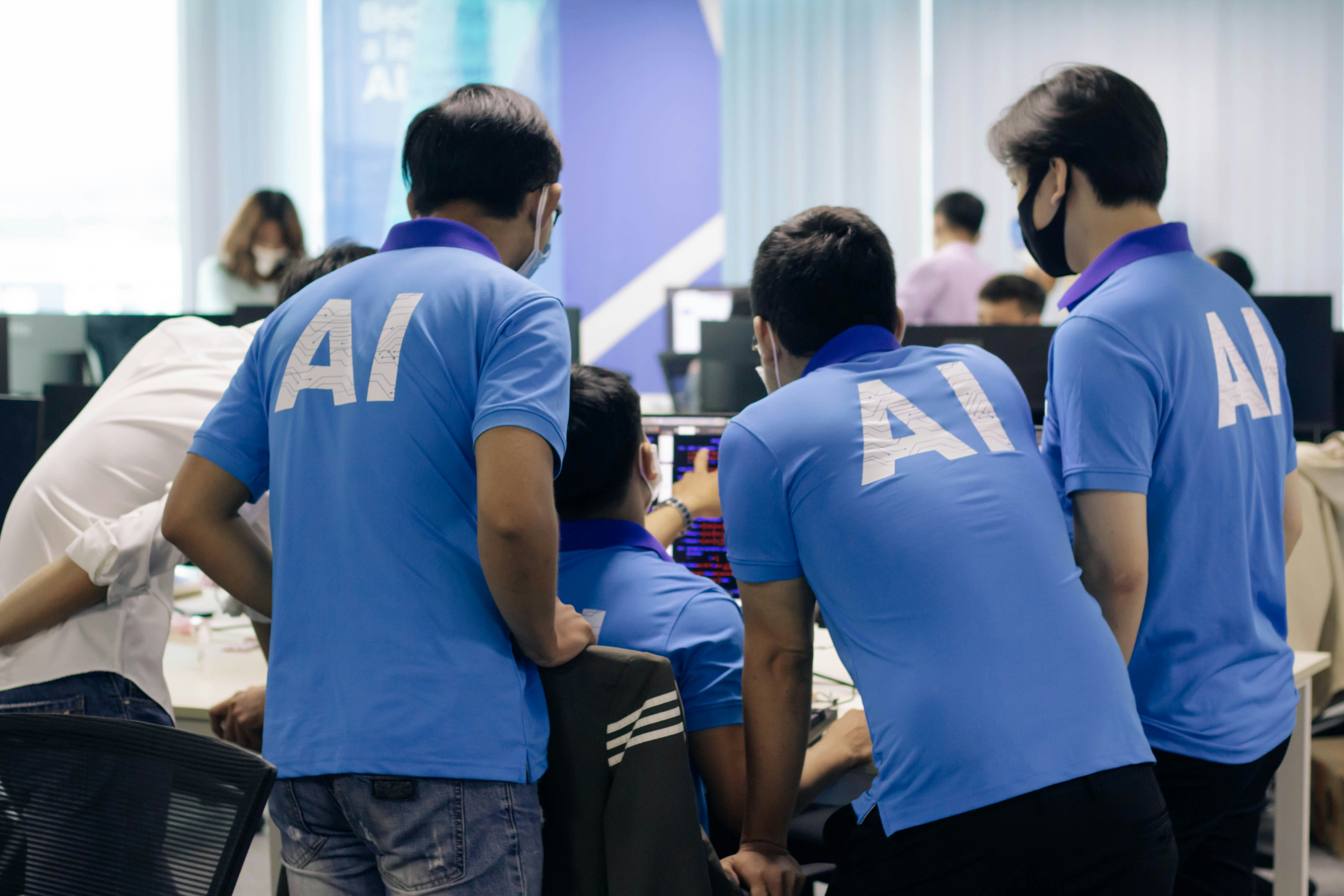
Outsourcing or artificial intelligence? Discover in this article when you need external talent, what AI can automate, and why more and more companies in Spain are turning to hybrid models to boost productivity.
The rise of artificial intelligence (AI) has led many companies to ask what seems like a simple question: if technology is capable of automating tasks, analyzing data, and executing processes in a matter of seconds, does it still make sense to rely on outsourcing, that is, subcontracting services to optimize resources?
The short answer is yes, but not for the same reasons as a few years ago. The issue is no longer choosing between outsourcing and artificial intelligence, but understanding what each can solve and how to combine them to achieve better results.
Many organizations are discovering that AI is extraordinarily effective at automating repetitive tasks, processing large volumes of information, and speeding up certain processes. However, when it comes to applying judgment, managing teams, optimizing complex operations, or executing commercial strategies, the human factor remains decisive. It is precisely at that point that outsourcing is finding a new opportunity for growth.
What AI can do for your company
Artificial intelligence is transforming virtually every sector. From customer service to document management, including predictive analytics and the automation of administrative processes, AI-based tools make it possible to reduce time and increase operational efficiency.
For many SMEs, these solutions represent an opportunity to improve productivity without expanding their workforce. Automating low-value tasks makes it possible to free up internal resources and allow professionals to focus on more strategic activities.
In addition, AI has become a particularly valuable ally for departments such as IT, marketing, finance, human resources, and customer service, where it can streamline processes that previously required a high level of manual effort. However, there is an important difference between automating a task and managing an entire business function.
What AI still cannot replace
Although the potential of artificial intelligence is enormous, many companies are finding that technology alone does not solve every operational challenge.
Managing sales teams, coordinating logistics, providing personalized customer service, overseeing operations, or executing complex projects still require experience, adaptability, and human decision-making.
For example, an AI tool can analyze sales data and identify business opportunities, but it can hardly replace the negotiation skills of a specialized sales team. Likewise, it can automate part of customer service, but it cannot manage delicate situations that require empathy or professional judgment.
The truth is that many organizations do not just need technology; they need people who can use it efficiently to achieve specific goals.
When outsourcing is still the best option
Outsourcing remains especially useful when a company needs quick access to specialized talent or needs to manage areas for which it does not have sufficient internal resources.
This often happens in departments such as IT, sales, logistics, customer service, data analysis, or operational management. Hiring, training, and retaining qualified professionals can be costly and time-consuming, especially in a market where certain profiles are difficult to find
Through outsourcing, companies can bring in teams that are already prepared, with specific experience and the ability to deliver results from day one.
In addition, specialized providers often have methodologies, tools, and industry knowledge that help accelerate processes and reduce errors. This is especially valuable in environments where speed of execution has a direct impact on competitiveness.
The rise of smart outsourcing
One of the most significant changes the market is experiencing is the emergence of “smart outsourcing” models, where artificial intelligence and human talent work together.
Far from competing with each other, both solutions complement one another. Technology takes on repetitive tasks and large-scale information analysis, while specialized teams focus on supervision, strategy, and decision-making.
This model makes it possible to increase productivity without losing the flexibility and adaptability that people bring.
In fact, many companies that initially thought AI would reduce the need to outsource services are discovering that the opposite is true: they need specialized partners to help them implement, manage, and optimize new technological tools.
Productivity: the real challenge
In Spain, one of the biggest business challenges continues to be improving productivity. In this context, both AI and outsourcing can become drivers of growth.
The key is to identify which activities generate differentiating value for the organization and which can be managed more efficiently through automation or external collaboration.
If a task is repetitive, standardizable, and requires little human intervention, AI can probably handle a large part of the work. If, on the other hand, it involves specialized expertise, customer interaction, operations management, or constant adaptability, outsourcing will continue to provide a competitive advantage that is difficult to replicate with technology alone.
How to know what your company needs
Before deciding between AI, outsourcing, or a combination of both, it is worth asking a few questions:
-
Do we internally have the talent needed to achieve our goals?
-
Is the task we want to optimize repetitive, or does it require professional judgment?
-
Do we need results in the short term, or can we invest time in developing internal capabilities?
-
Is the activity part of our core business, or is it a support function?
-
Do we have the resources to properly implement and manage artificial intelligence tools?
The answers will help determine which solution is most appropriate in each case.
The future is not AI vs. Outsourcing
Framing the decision as a choice between artificial intelligence and outsourcing can lead to the wrong conclusions. The trend shaping the market is actually the opposite: the integration of both capabilities.
The most competitive companies are not replacing people with technology or outsourcing all of their processes. They are building hybrid models that combine automation, data, and specialized talent to respond more quickly to market changes.
That is why the right question may not be whether your company needs outsourcing or artificial intelligence. The real question is how to combine both tools to increase productivity, access the best talent, and maintain a sustainable competitive advantage over time.
At Ambit Iberia, we have spent more than 20 years providing outsourcing and headhunting services across all sectors, helping companies grow with flexible, efficient, and people-centered solutions. We take care of the entire process, selection, training, and coordination, while always putting people first, because outsourcing with us means trusting a team that places both business and talent at the center. Contact us!




Cuéntanos tu opinión